
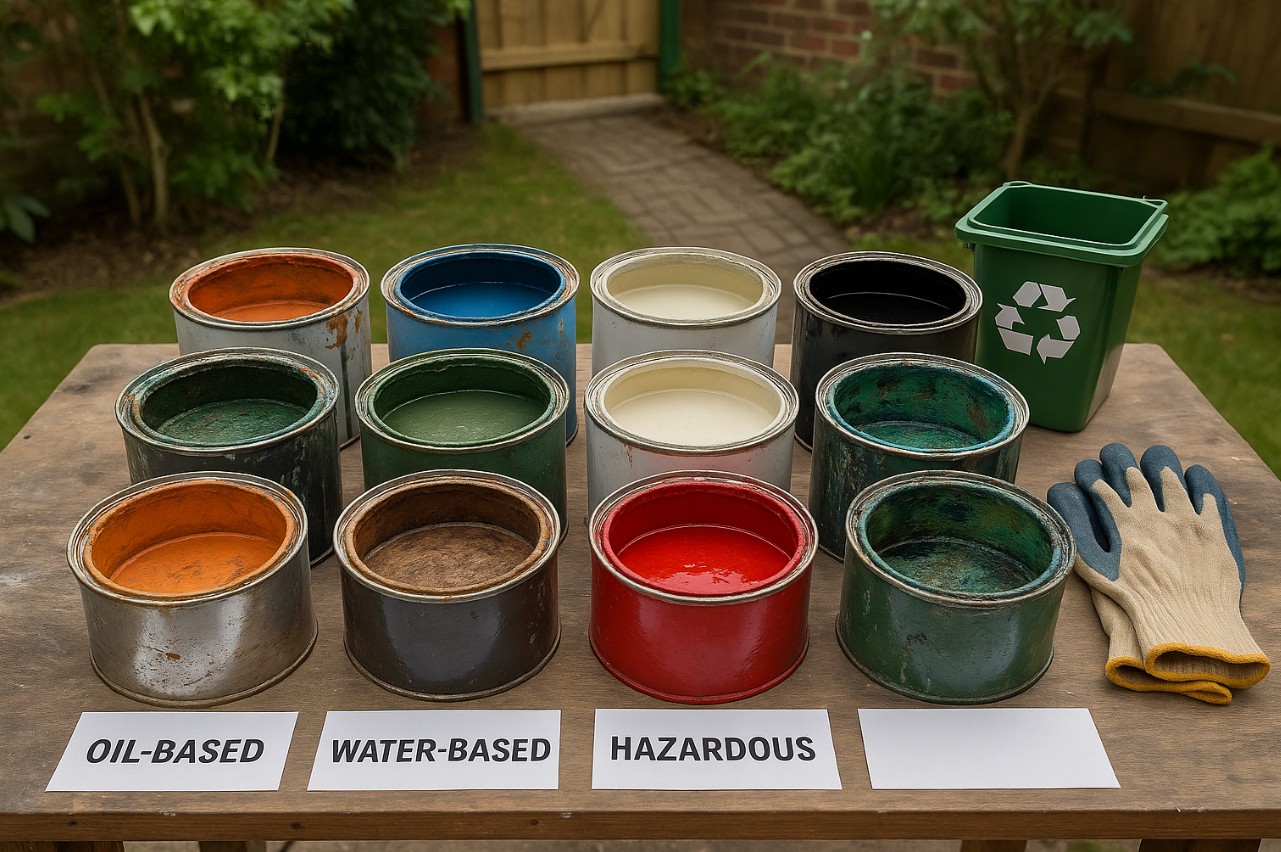
Proper disposal of paint is often overlooked, yet it’s essential for protecting the environment and ensuring compliance with UK waste regulations. Whether you’re clearing out your garage or managing leftover materials from a renovation project, knowing how to dispose of paint safely helps prevent pollution and health hazards. Different types of paint require different handling methods, and not all can go in the bin. This guide outlines the safest and most responsible ways to dispose of unwanted paint in the UK.
Why Proper Paint Disposal Matters?
Paints contain substances that are toxic, flammable, and reactive. These characteristics classify them as hazardous materials once they are no longer usable. Disposing of paint improperly can contaminate soil and water sources, pose fire hazards, and harm wildlife.
Water-based paints may appear harmless, but they can still contain heavy metals and chemical additives. Oil-based paints contain volatile organic compounds (VOCs) that contribute to indoor air pollution and pose serious health risks when inhaled over time.
How Long Does Paint Last Before Disposal is Necessary?
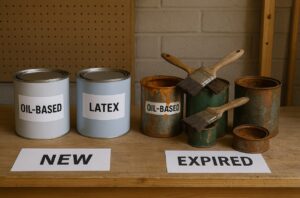
Understanding the shelf life of different types of paint can help homeowners and businesses minimise waste. Paints that are stored properly can often be reused years after their purchase.
Paint Lifespan Comparison
| Paint Type | Unopened Shelf Life | Opened (Properly Stored) |
| Oil-Based Paint | Up to 15 years | 5 to 10 years |
| Water-Based/Latex Paint | Up to 10 years | 2 to 5 years |
Indicators of Expired Paint
- The texture becomes lumpy or separates permanently even after stirring
- A foul or sour smell develops
- Mould growth appears on the surface
- The paint can is corroded or leaking
If any of these signs are present, the paint should not be used and must be disposed of appropriately.
Top 5 Safe and Responsible Methods to Dispose of Paint
Disposing of paint safely is essential for protecting the environment, avoiding contamination, and complying with UK waste regulations. Many people are unsure of what to do with old or leftover paint, especially if it’s no longer usable. Fortunately, there are several responsible and legal ways to manage paint waste, whether you’re a homeowner with a few tins or a business dealing with commercial volumes.
1. Donate or Reuse Leftover Paint

One of the most sustainable approaches to paint disposal is reusing or donating it. Leftover paint that is still in good condition can be valuable to someone else.
Many schools, community centres, charities, or neighbours may be happy to receive unused or partially used paint for:
- Refurbishment projects
- Art programmes
- Local volunteer initiatives
Donating leftover paint prevents unnecessary waste, reduces the demand for new paint production, and extends the product’s lifecycle. Some local councils and community organisations even host paint reuse schemes or paint swap days to encourage sustainability.
Before donating, make sure:
- The paint hasn’t expired
- The container is properly sealed and labelled
- It’s been stored in a dry, temperature-controlled space
2. Dry Out Paint for Household Waste Disposal

Water-based paints like latex or acrylic can be safely disposed of in your general waste once they’ve been dried out. Wet paint should never be placed in household bins as it can leak, contaminate other waste, and damage refuse collection systems.
To dry out paint:
- Add cat litter, sawdust, or shredded newspaper to absorb the liquid
- Leave the container open in a well-ventilated area, away from children and pets
- Allow it to dry completely until it forms a solid block
Once the paint is fully dried:
- Ensure the lid is off to show the contents are solidified
- Place the container in your general waste bin (check with your local council first)
This method is ideal for small volumes of leftover paint. However, it’s not suitable for oil-based or solvent-based paints, which are classed as hazardous waste.
3. Use Council Curbside Collection Services
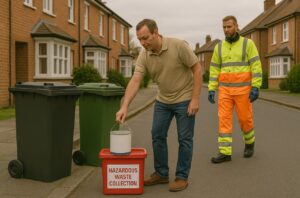
Most UK councils provide hazardous household waste collection services, though the availability and process can vary by region. These services allow residents to dispose of paints, chemicals, and other hazardous items safely and legally.
What’s typically accepted:
- Oil-based paint
- Spray paints
- Varnish and wood preservatives
- Paint thinners and solvents
How to arrange collection:
- Visit your local council’s website
- Book an appointment or request a collection form
- Follow instructions for safely packaging and labelling the waste
In some cases, you may need to take the paint to a Household Waste Recycling Centre (HWRC). Councils may also designate certain days for collecting hazardous materials, so it’s worth planning in advance.
4. Take It to a Hazardous Waste Disposal Facility

If you have multiple tins or paints that can’t be dried out (e.g., oil-based paints), taking them directly to a licensed hazardous waste disposal facility is one of the most effective solutions.
Facilities are equipped to handle:
- Flammable substances
- Paints containing VOCs and heavy metals
- Contaminated containers and tools
These centres follow strict environmental controls to treat or incinerate hazardous waste. Before visiting, make sure to:
- Contact the facility to confirm what they accept
- Label your containers clearly
- Transport the materials safely and securely
Most waste disposal sites will have specific instructions or booking systems to prevent delays or rejections.
5. Contact Professional Paint Disposal Services

When dealing with large quantities of paint waste, or if you’re uncertain about the correct disposal process, hiring a professional paint disposal service is often the most reliable and compliant option.
For residents and businesses across the UK, wasteremovalnearme.co.uk offers a comprehensive, licensed service for the safe and legal disposal of all types of paint, including:
- Water-based paints
- Oil-based and solvent-based paints
- Spray paints and aerosols
- Paint thinners and chemical-related waste
As the person behind wasteremovalnearme.co.uk, I ensure that every collection is handled in accordance with UK waste regulations and the Environmental Protection Act. Whether you’re a homeowner clearing out your garage or a contractor managing leftover site materials, I make paint disposal simple, safe, and fully compliant.
Benefits of using our professional service include:
- On-site collection at a time convenient for you
- Licensed waste carriers and full traceability
- Proper segregation and treatment of paint waste
- Access to waste transfer notes for your records
- Competitive pricing with no hidden fees
You don’t have to worry about what goes where or how to prepare the waste. We handle everything—from packaging to transport and final disposal. Our service ensures that no paint ends up harming the environment or causing you legal headaches.
If you’re not sure what type of paint you have or how to dispose of it, just contact us and we’ll take care of the rest. We work with homeowners, landlords, decorators, schools, and businesses of all sizes to provide hassle-free paint disposal anywhere in the UK.
How to Dispose of Oil-Based Paints Safely?
Oil-based paints contain solvents and VOCs that make them flammable and toxic. Due to their composition, they cannot be dried out for general waste and must be taken to hazardous waste collection points or disposed of by professionals.
Oil-based paint should never be poured down the drain or discarded with standard rubbish. It poses risks such as:
- Contaminating the water table
- Producing harmful fumes
- Damaging plumbing systems
If the paint is still usable, it should be donated. Otherwise, it should be brought to a facility or collected by a licensed waste disposal provider.
How to Dispose of Water-Based or Latex Paint?
Although less harmful than oil-based paints, latex and water-based paints can still pose environmental hazards if not managed correctly.
Methods of disposal include:
- Allowing the paint to dry completely before disposal
- Adding absorbent materials like newspaper or sawdust to speed up drying
- Using a paint hardener for larger quantities
Water-based paints should only be washed off tools using drains connected to the sanitary sewer, not storm drains, as the latter often lead directly to rivers or natural water bodies.
Avoid washing large quantities of paint down any drain as this can lead to plumbing damage and environmental violations.
Can You Recycle Paint and Paint Cans?
Recycling is an important part of responsible waste management, and this extends to paint and its containers. However, recycling paint isn’t as straightforward as tossing a tin into your blue bin. Both paint type and container condition play a role in determining whether recycling is possible.
Recycling Paint
Paint itself can be recycled, but not through regular curbside collection. Leftover paint, particularly water-based varieties, can be filtered, treated, and remixed into new paint. In the UK, certain community programmes and paint recycling schemes are designed to:
- Collect unused or unwanted paint
- Assess its quality and usability
- Reprocess it for resale or donation
Community RePaint, supported by Dulux, is one of the leading networks that collects surplus paint and redistributes it to charities, community projects, and low-income families. If you have usable paint in good condition, this is a sustainable and socially beneficial way to prevent waste.
It’s important to note:
- Only liquid paint in good condition is suitable for recycling
- Oil-based and solvent paints are more difficult to recycle due to their hazardous nature
- Dried-out or expired paint is usually not recyclable
Always check with your local council or a recognised paint reuse organisation before assuming paint can be recycled.
Recycling Paint Cans
Once the paint is removed or dried, the container itself may be eligible for recycling, depending on the material and local recycling policies.
Metal Paint Cans:
- Can be recycled once completely empty and dry
- Remove the lid and ensure no wet paint remains
- Accepted at many household waste recycling centres (HWRCs)
- May be repurposed for storage or craft use
Plastic Paint Cans:
- Recycling policies vary by region and council
- Must be clean, dry, and free of any hazardous residues
- May require disposal at specialised recycling facilities
If you are unsure whether your local council accepts paint cans for recycling, visit their website or use national tools such as Recycle Now to check eligibility and guidelines.
Creative Reuse
For those interested in upcycling, empty paint cans can be reused in several ways:
- As storage containers for nuts, bolts, and tools
- As planters in gardens or balconies
- In DIY and craft projects
Repurposing paint cans not only reduces waste but also adds value to materials that would otherwise be discarded.
How to Manage Paint-Related Materials Responsibly?
Paint disposal goes beyond just dealing with the paint itself. There are several related materials that need just as much attention due to their flammability, toxicity, or environmental impact. These include paint thinners, solvents, applicators, and aerosol spray cans. If mismanaged, these items can pose health hazards, contribute to pollution, and in some cases, lead to legal penalties.
Paint Thinners and Solvents
Paint thinners, turpentine, and similar solvents are commonly used to clean brushes and thin oil-based paints. These substances are highly flammable, toxic, and require special handling for disposal.
Disposal Process:
- Settle and Separate
Pour used thinner into a transparent glass or metal container with a tight-fitting lid. Let it sit undisturbed for a few days or weeks. The solid particles will settle at the bottom. - Reuse the Clean Thinner
Carefully pour the clear liquid into another labelled container for reuse. - Dispose of Residue as Hazardous Waste
The container with the sediment must be treated as hazardous waste. It should be taken to a council-run household hazardous waste facility or disposed of via a licensed waste management company. - Do Not Pour Down the Drain
Never pour thinners into sinks, toilets, or storm drains. They can damage plumbing and contaminate water supplies.
Brushes, Rollers, and Applicators
Tools used for painting often carry residue that needs careful cleaning, especially if they were used with oil-based products.
- For water-based paint, tools can be washed in a sink connected to the sanitary sewer system, not the storm drain.
- For oil-based paint, tools should be cleaned with thinners, and the used solvent should be treated as hazardous waste.
If the tools are too saturated or no longer usable, they must be disposed of as contaminated waste, not with standard household rubbish.
Aerosol Paint Cans
Aerosol cans, often used for spray painting, present another layer of complexity due to the pressurised gases they contain. Even when seemingly empty, they can explode under pressure or heat.
Proper Disposal Steps:
- Fully Empty Cans: Once there is no product or gas left and the nozzle stops spraying, the can is safe for general waste or recycling (depending on local rules).
- Partially Full Cans: These must be treated as hazardous waste and taken to a facility equipped to handle pressurised and chemical waste.
- Do Not Puncture or Incinerate: Attempting to empty the can forcefully or burn it is extremely dangerous and can lead to serious injury or fire.
Check whether your local recycling centre accepts aerosol cans. Some may have separate bins or collection points specifically for aerosols.
Rags and Cleaning Materials
Rags soaked in paint or thinners are often overlooked but are also hazardous. These materials can spontaneously combust, especially when oil-based products are involved.
- Store used rags in a metal container with a tight lid
- Keep them away from heat sources and open flames
- Dispose of them through a hazardous waste service
How Do UK Hazardous Waste Regulations for Paint?
In the UK, the classification and disposal of hazardous waste, including paint, are governed by the Environment Agency and must comply with several legal frameworks.
Relevant regulations include:
- The Environmental Protection Act 1990
- The Hazardous Waste Regulations 2005
- COSHH (Control of Substances Hazardous to Health)
Key regulatory considerations:
- Businesses generating hazardous waste must register with the Environment Agency
- Waste must be transported by licensed carriers
- Records such as waste transfer notes must be maintained
Households are generally exempt from registration but are still required to dispose of hazardous waste responsibly. Local councils often provide access to disposal services that align with national environmental regulations.
Conclusion
Proper paint disposal is not just about following environmental laws; it’s about protecting public health, preserving natural resources, and promoting responsible waste management. Whether dealing with water-based paints, oil-based products, or associated materials like thinners and aerosols, each type requires a specific approach to ensure safety and compliance.
For those seeking a hassle-free, legally compliant, and environmentally responsible solution, Waste Removal London offers one of the most trusted paint disposal services in the UK. From small domestic collections to large-scale commercial clearances, their licensed team ensures every job is handled professionally, efficiently, and with full adherence to UK waste disposal regulations.
Frequently Asked Questions
Can I throw old paint in the bin in the UK?
Only if it’s completely dried out and water-based. Oil-based paint must go to a hazardous waste facility.
Is it illegal to pour paint down the drain?
Yes. Pouring any type of paint, especially oil-based, into a drain violates environmental protection laws.
What is the best way to dry paint before disposal?
Use a paint hardener, cat litter, or cardboard to let the paint solidify before binning.
Where can I take old paint near me?
Your local council website or recycling centre can guide you to the nearest drop-off location.
Are empty paint cans recyclable in the UK?
Yes, if they’re clean and dry. Check with your local recycling facility to confirm acceptance.
How do I dispose of spray paint cans?
Empty cans can go in household waste. Partially full cans must be treated as hazardous waste.
What are the fines for improper paint disposal in the UK?
Fines can vary by local authority but may include penalties under the Environmental Protection Act and hazardous waste regulations.


